1
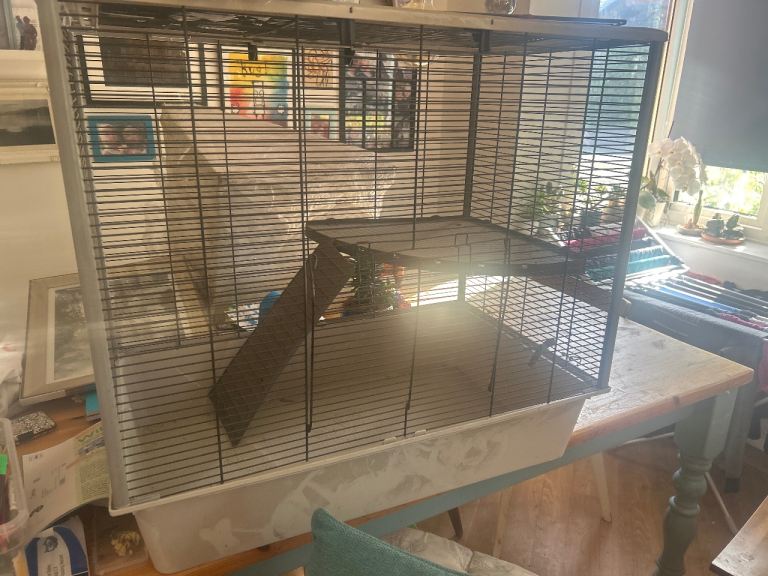
Rat cage
Bradley Stoke, Bristol
£40
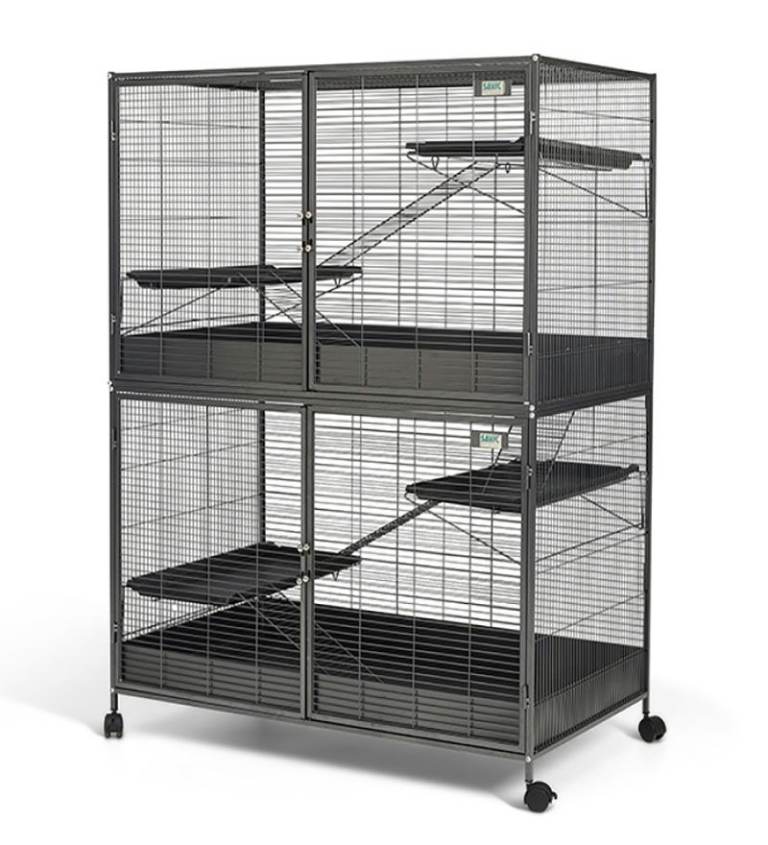
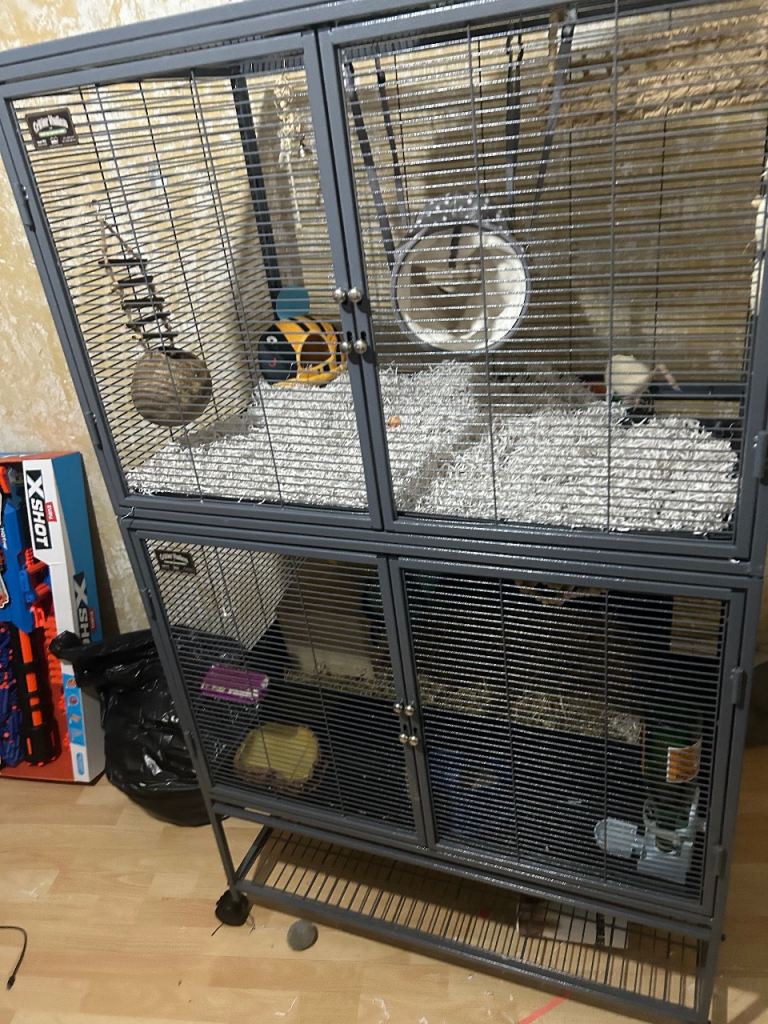
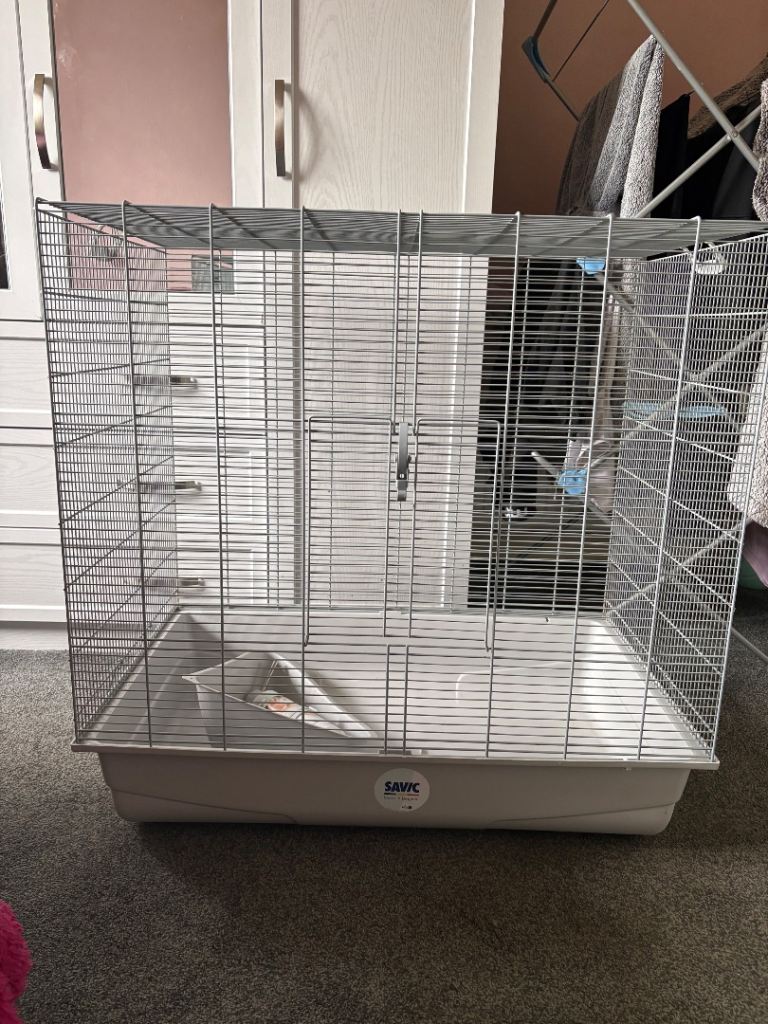
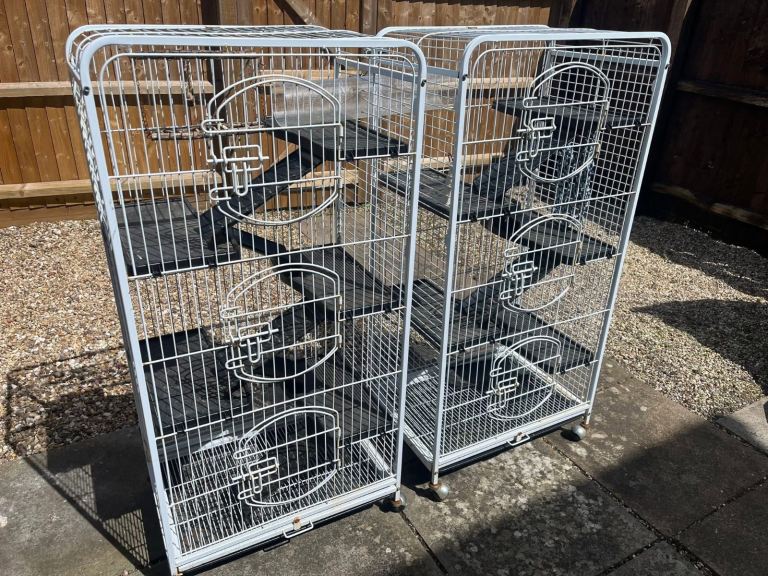
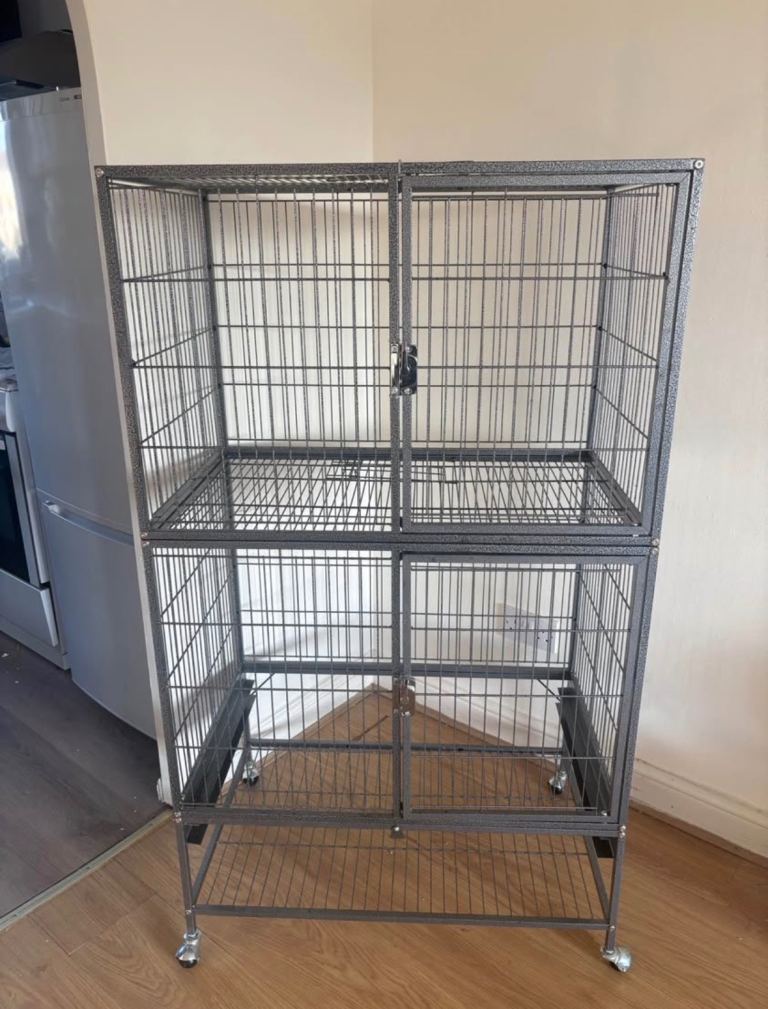
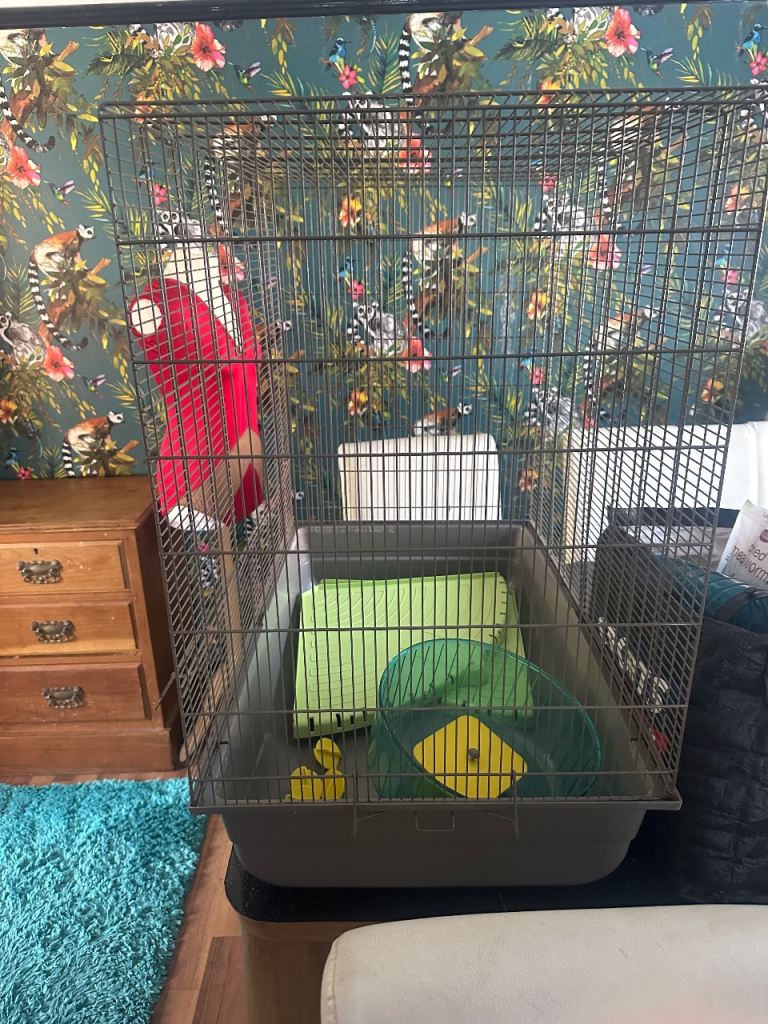
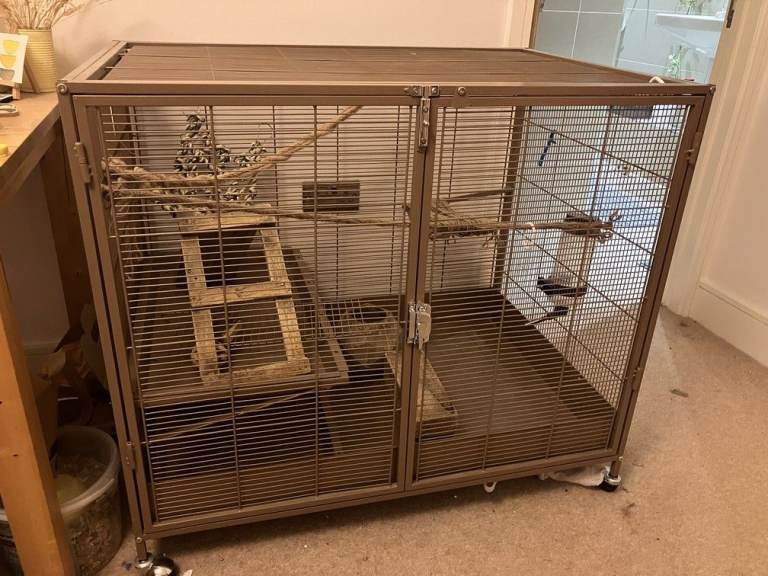
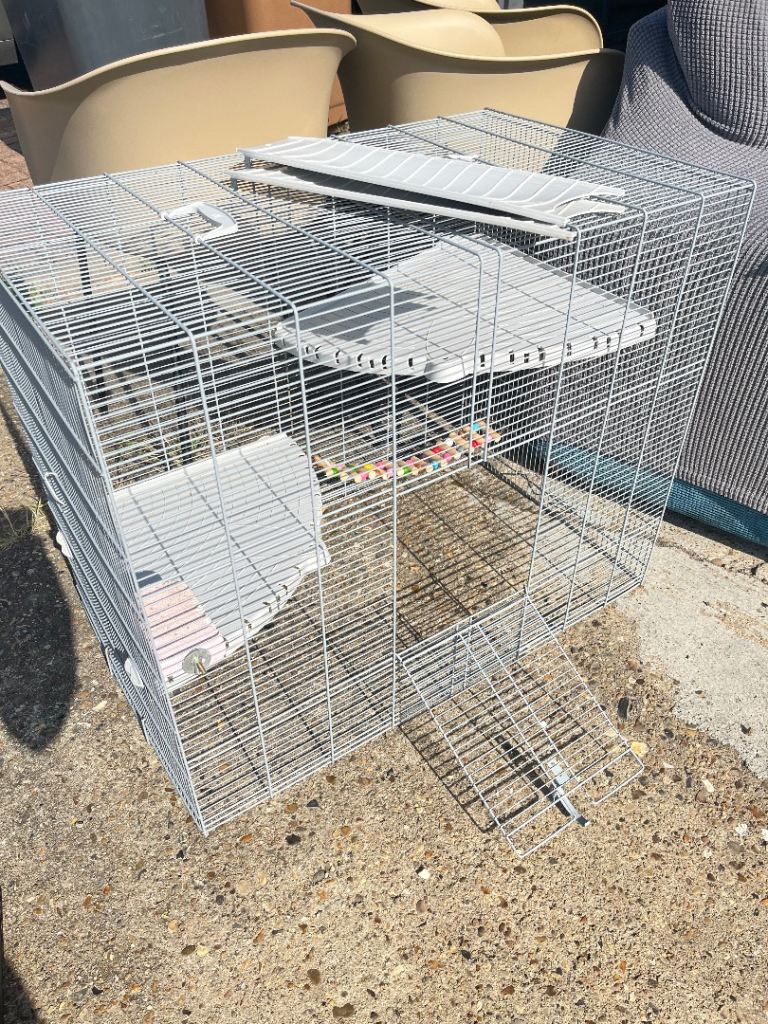
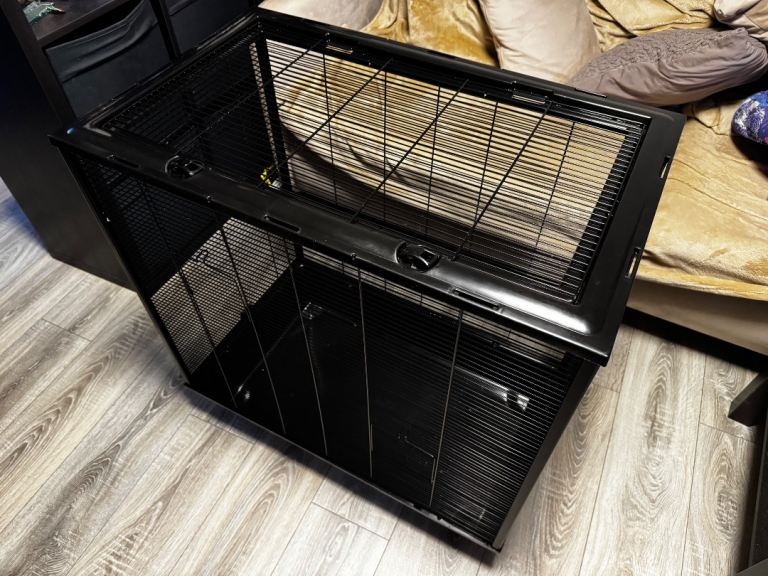
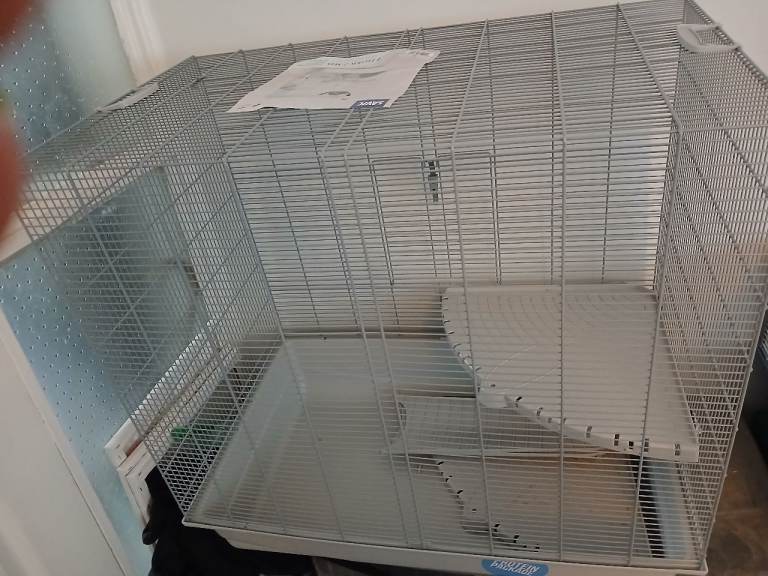
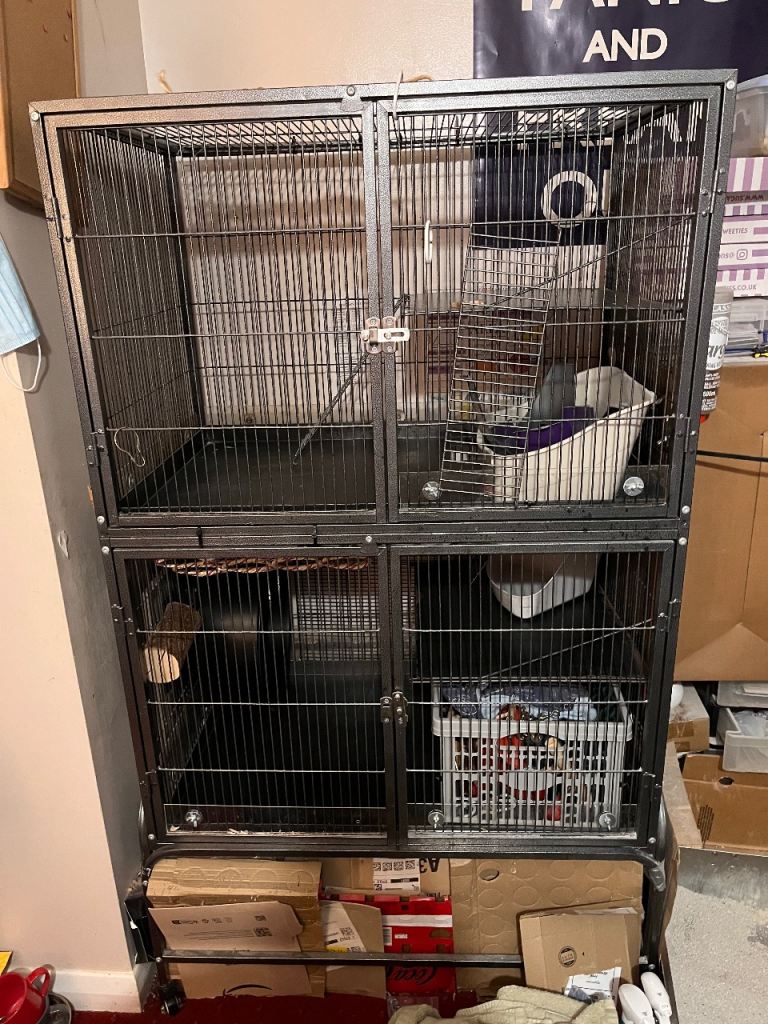
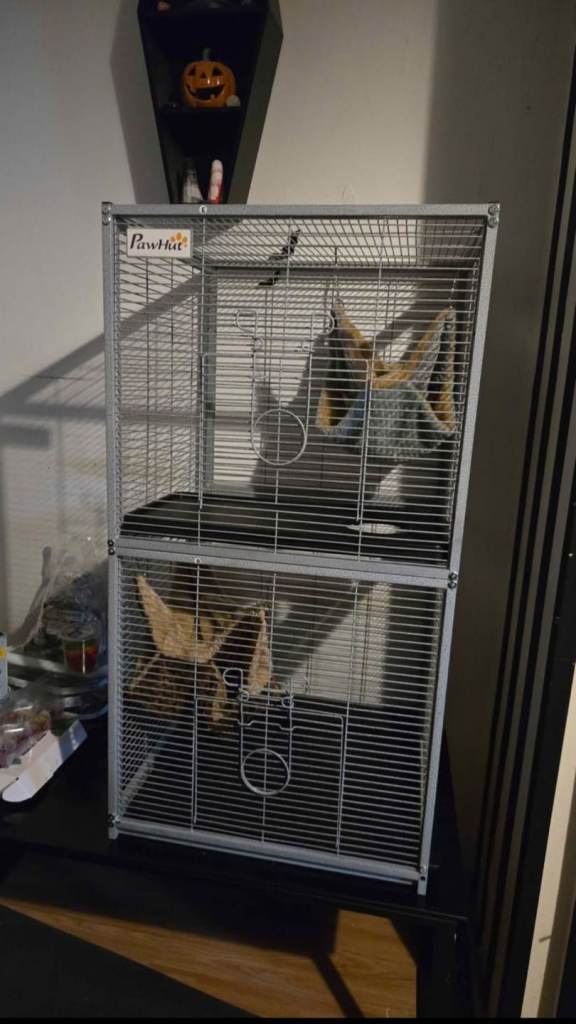
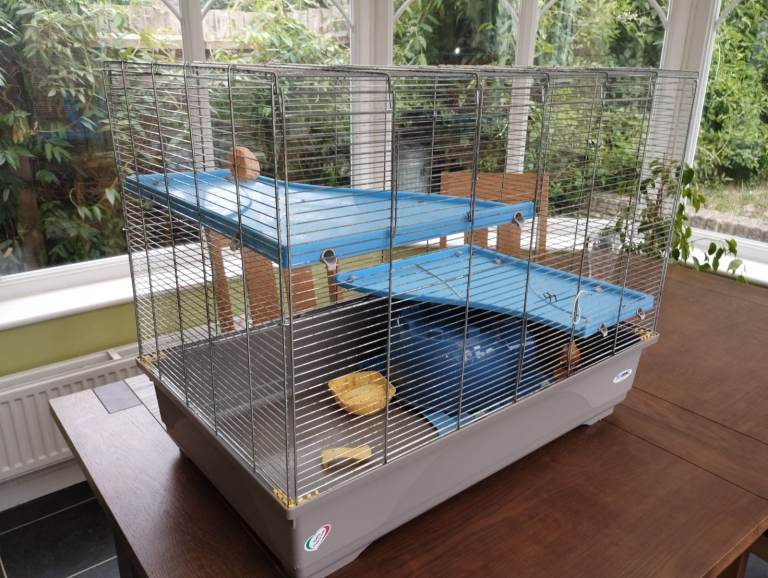
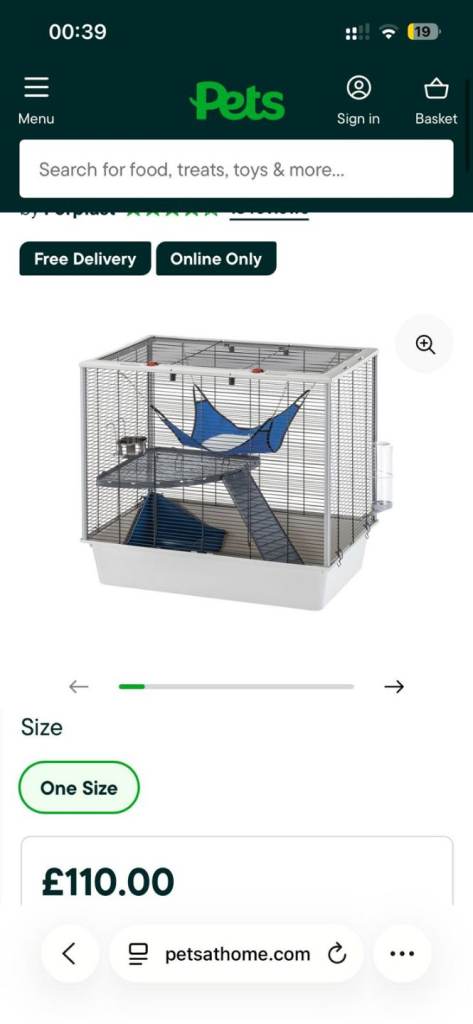
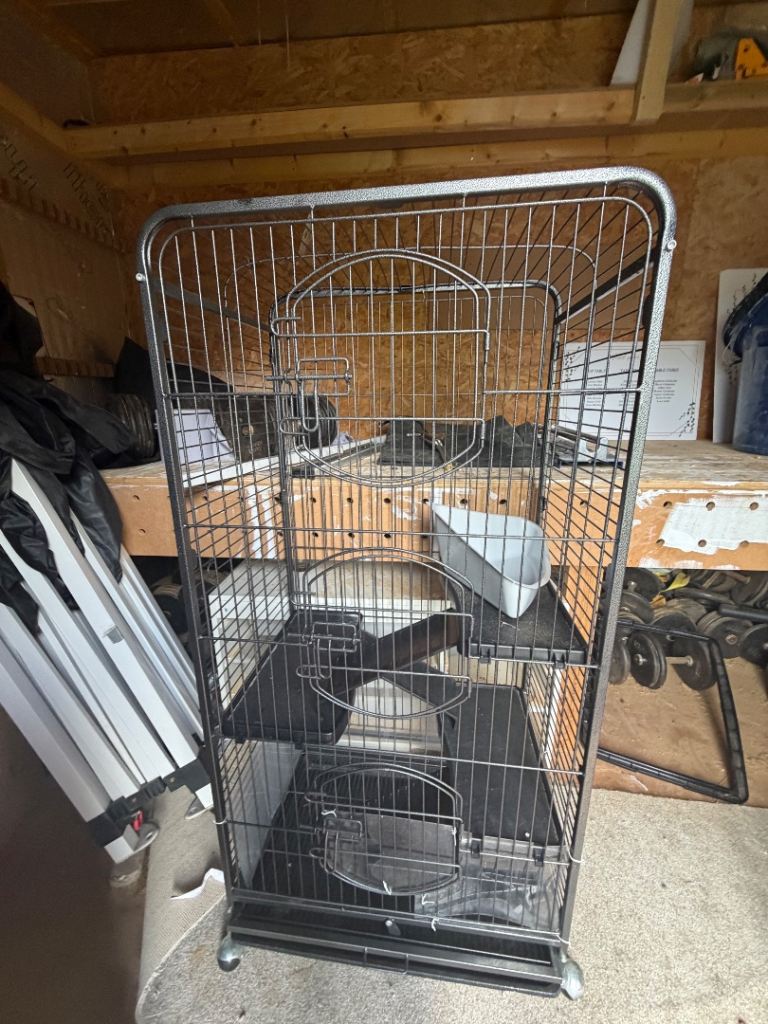
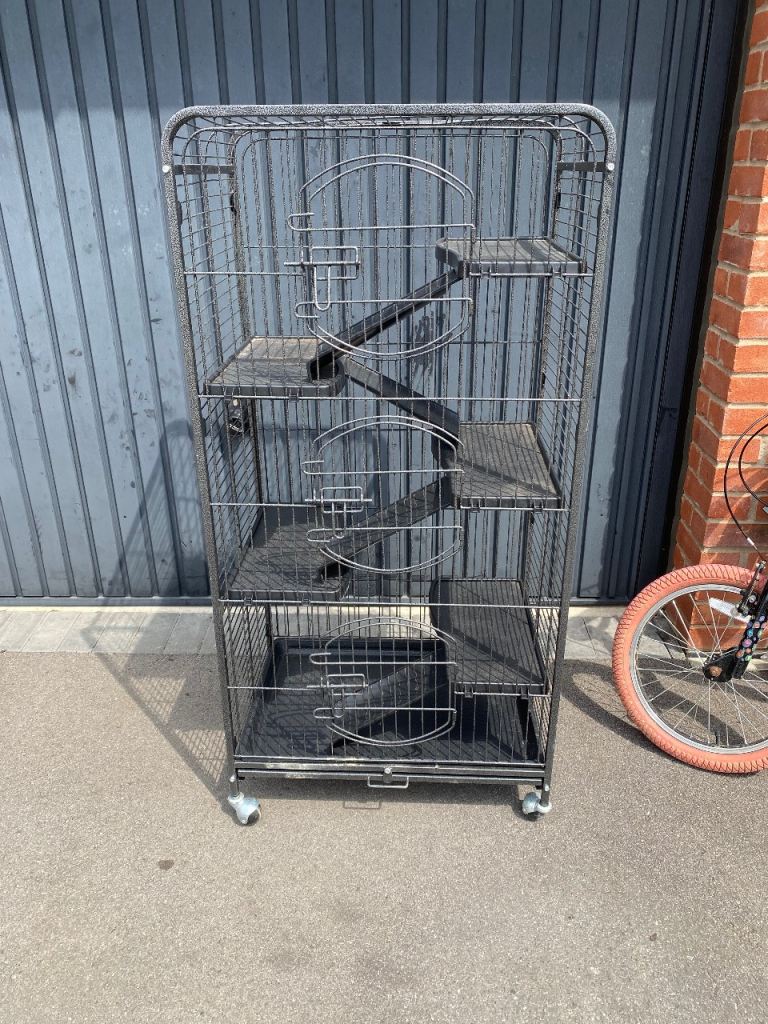
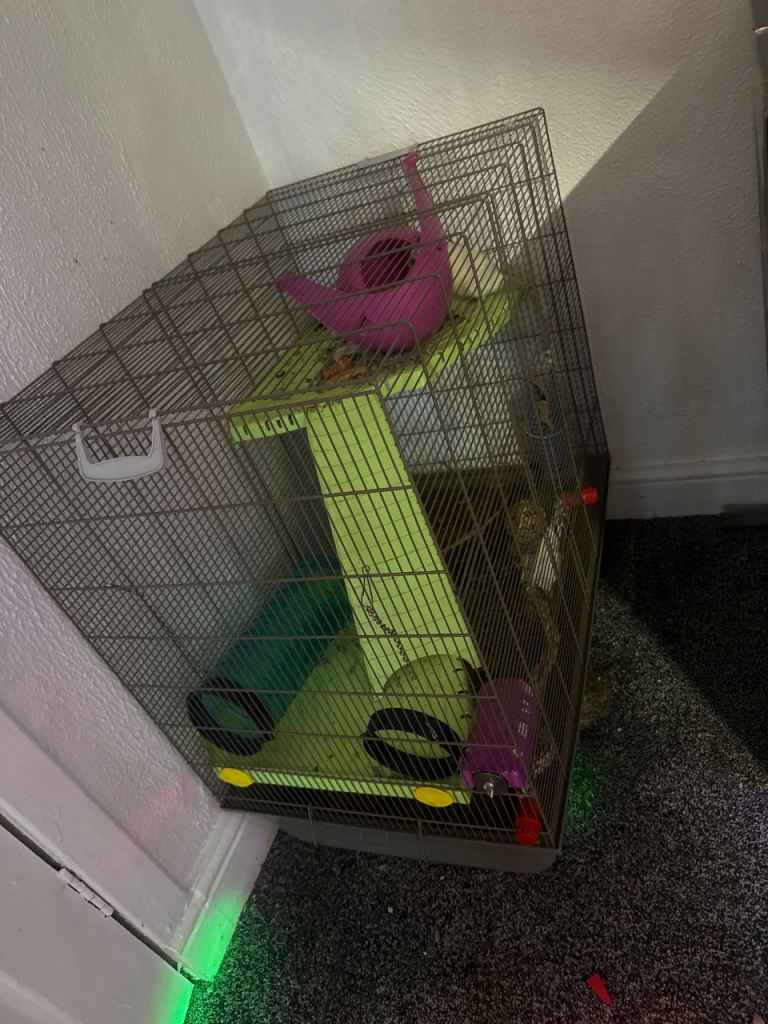
Rats are social animals and should be kept in pairs or groups, so a larger cage is essential. A minimum cage size for two rats is generally considered to be around 80cm x 50cm x 80cm (length x width x height). More space is always better, and consider the bar spacing to ensure rats can't escape, especially younger ones. Vertical space is important as rats like to climb.
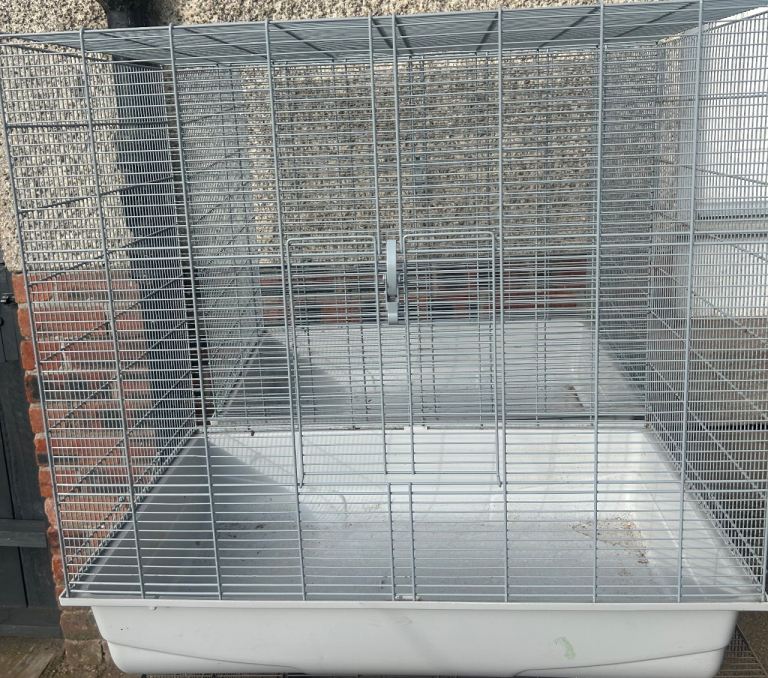
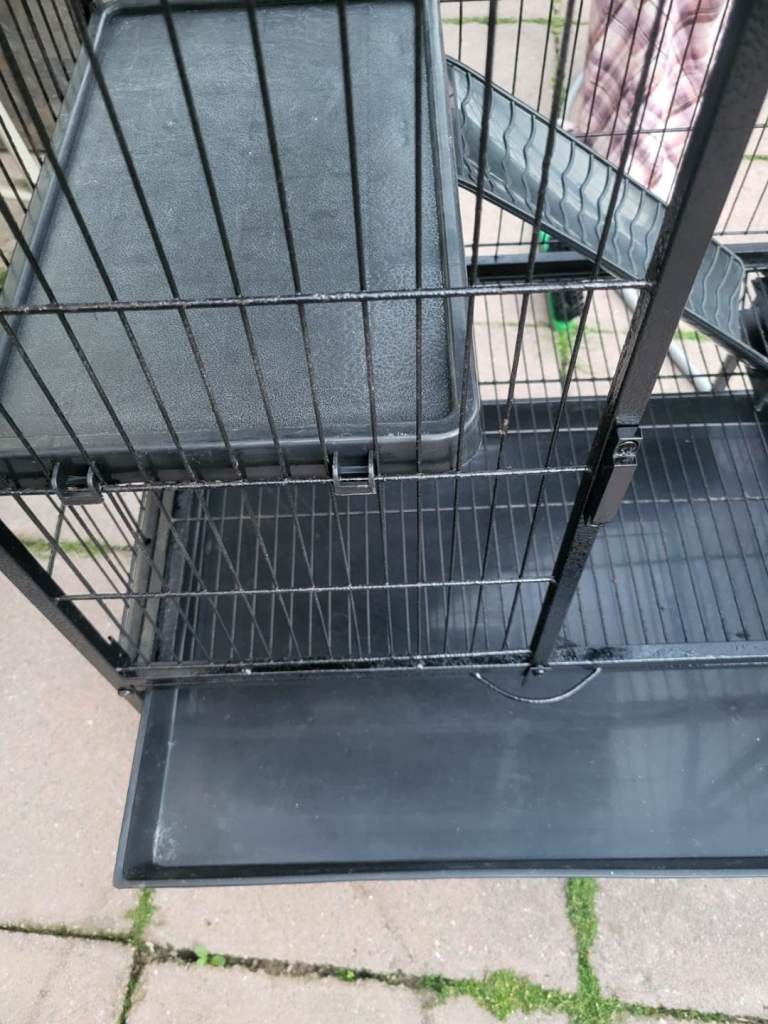
Cages with metal bars and a solid plastic or metal base are generally the most durable and easiest to clean. Avoid cages with wire mesh floors, as these can cause foot problems for rats. Ensure any paint or coating is non-toxic and pet-safe.
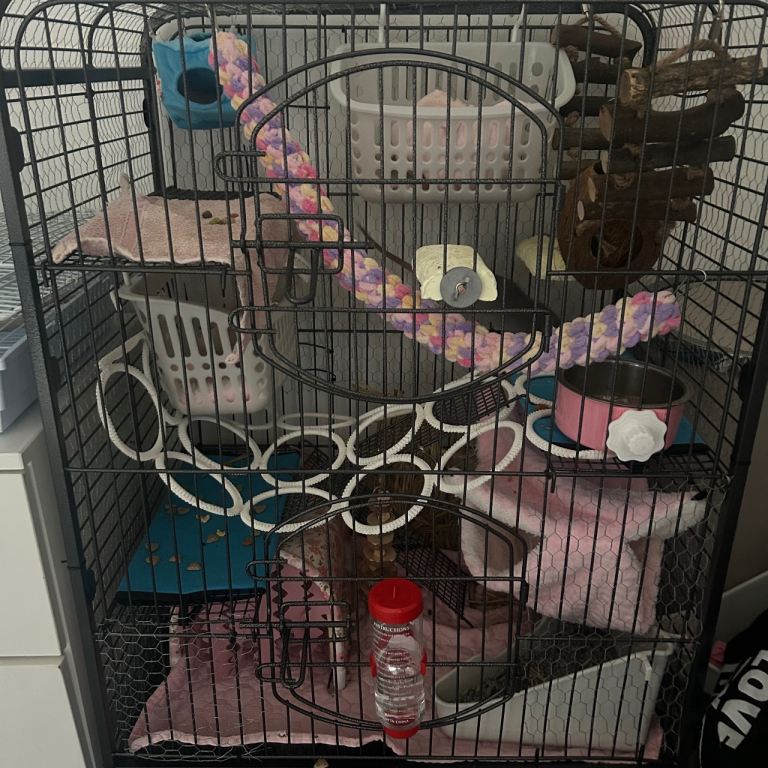
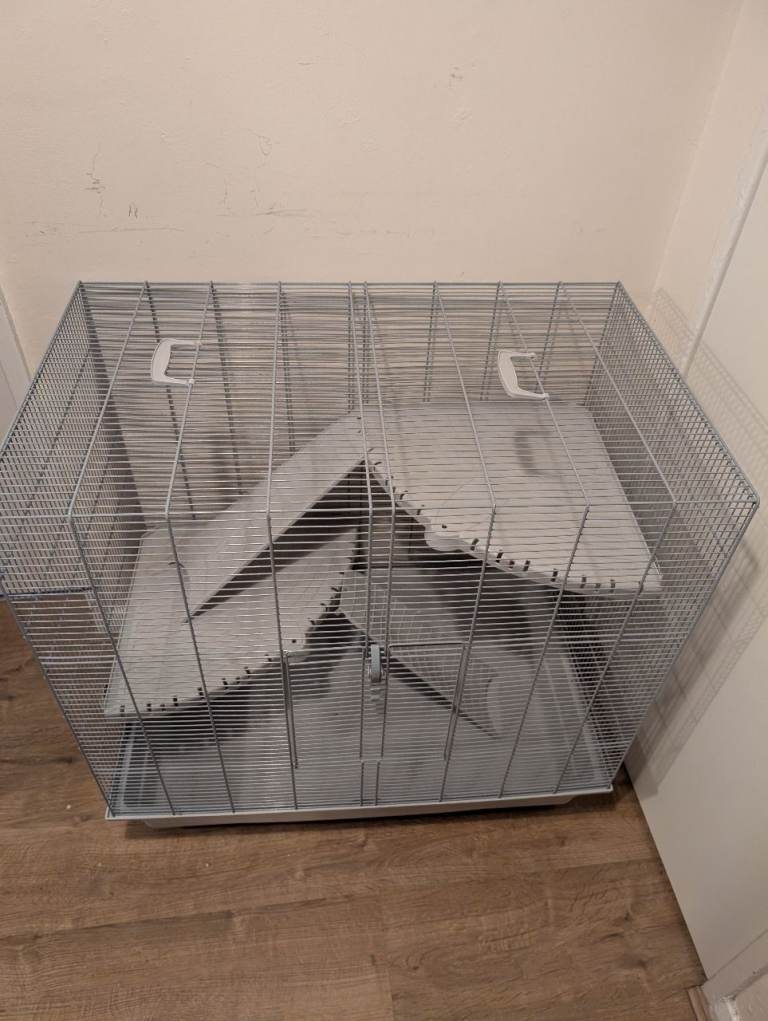
Look for a cage with multiple levels or platforms to provide climbing opportunities and maximise space. A secure door latch is crucial to prevent escapes. Consider cages with removable trays for easy cleaning. Also, ensure the cage is well-ventilated to prevent the build-up of ammonia.
Check for any sharp edges or protruding wires that could injure your rats. Ensure the bar spacing is appropriate to prevent escapes, especially for young rats. Avoid cages made with treated wood, as rats may chew on it and ingest harmful chemicals. Regularly inspect the cage for any damage that could pose a hazard.
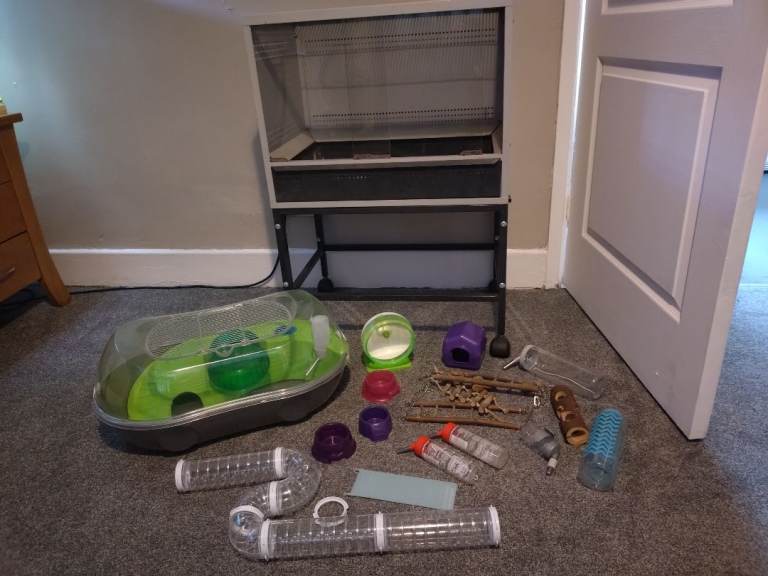
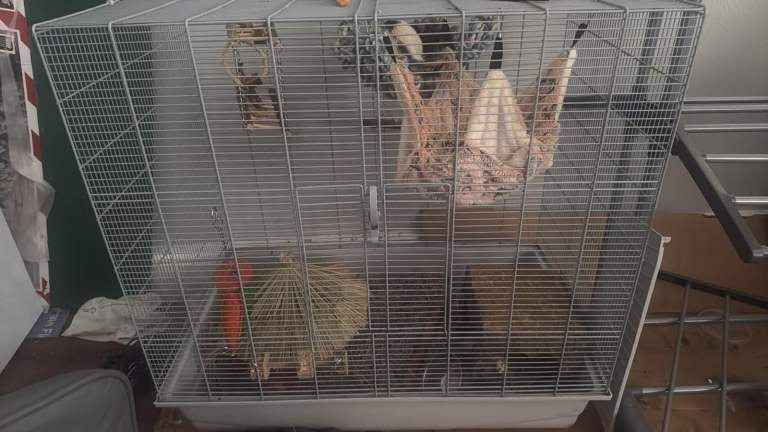
Essential accessories include a water bottle or bowl, a food bowl, a comfortable bedding material (such as shredded paper or fleece), and hiding places like hammocks, houses, or tubes. Provide toys for enrichment, such as chew toys, climbing ropes, or puzzle toys. Remember to clean and replace bedding regularly to maintain hygiene.