£5
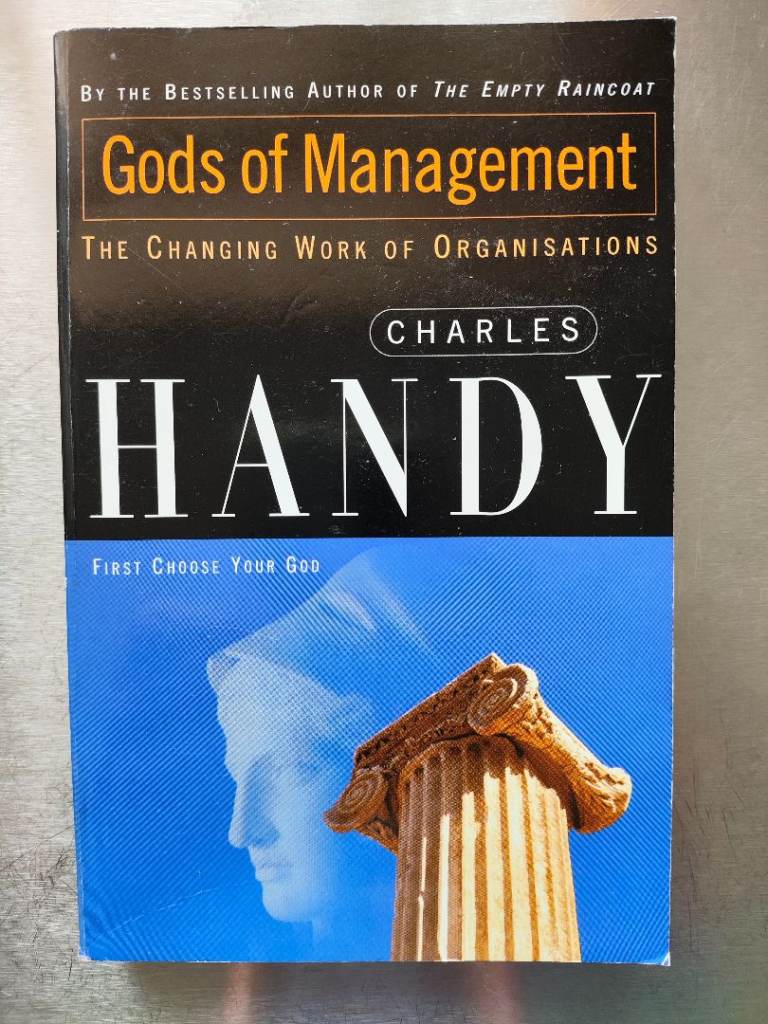
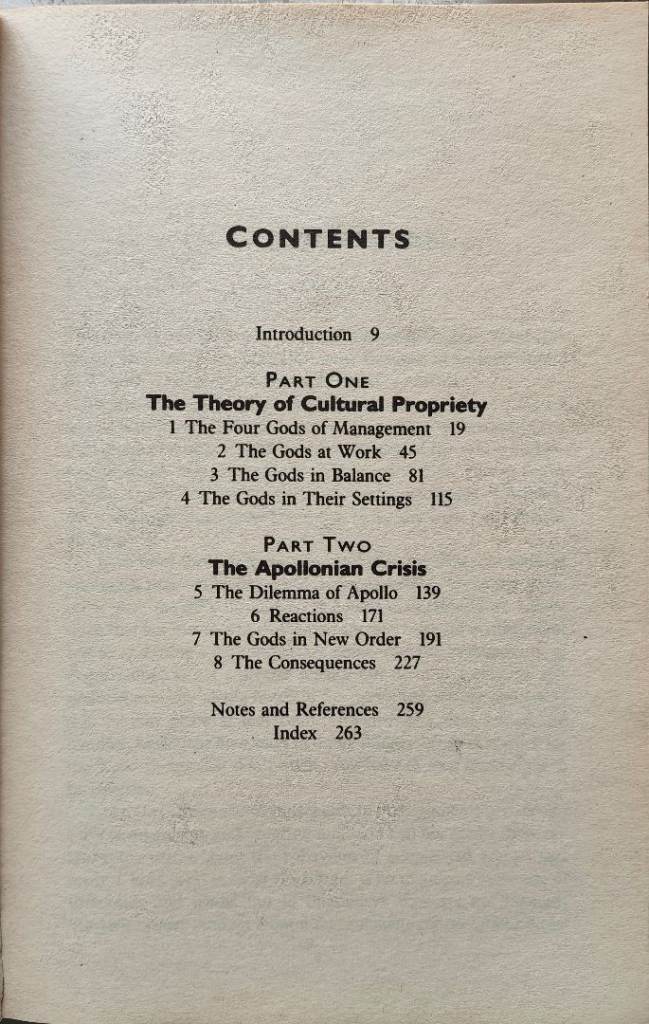
Gods of Management, by Charles Handy
Enfield, London
1 of 5
£5
Description
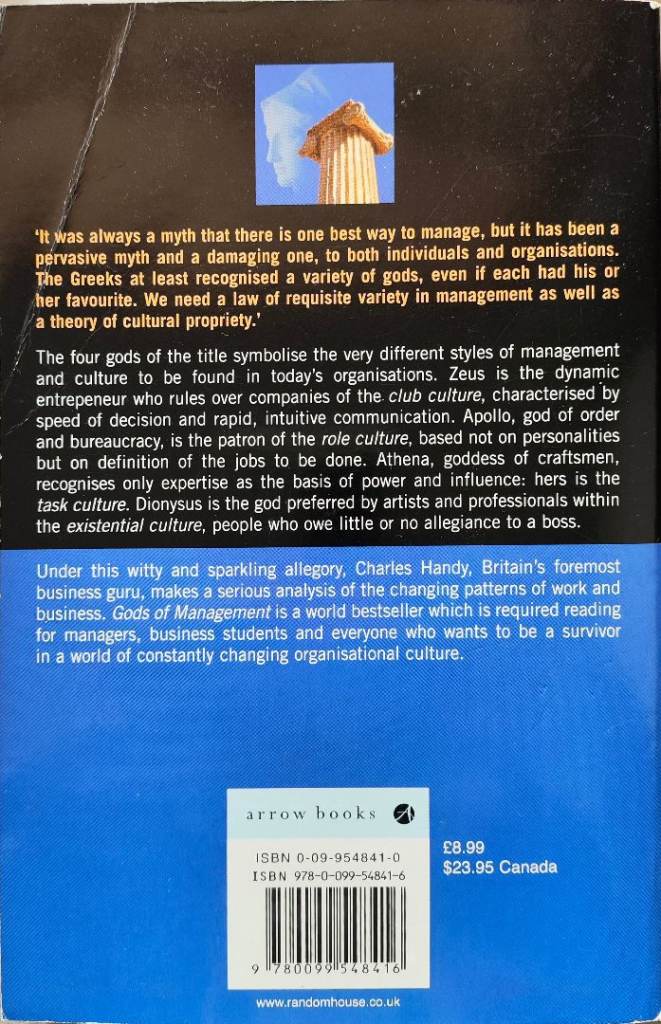
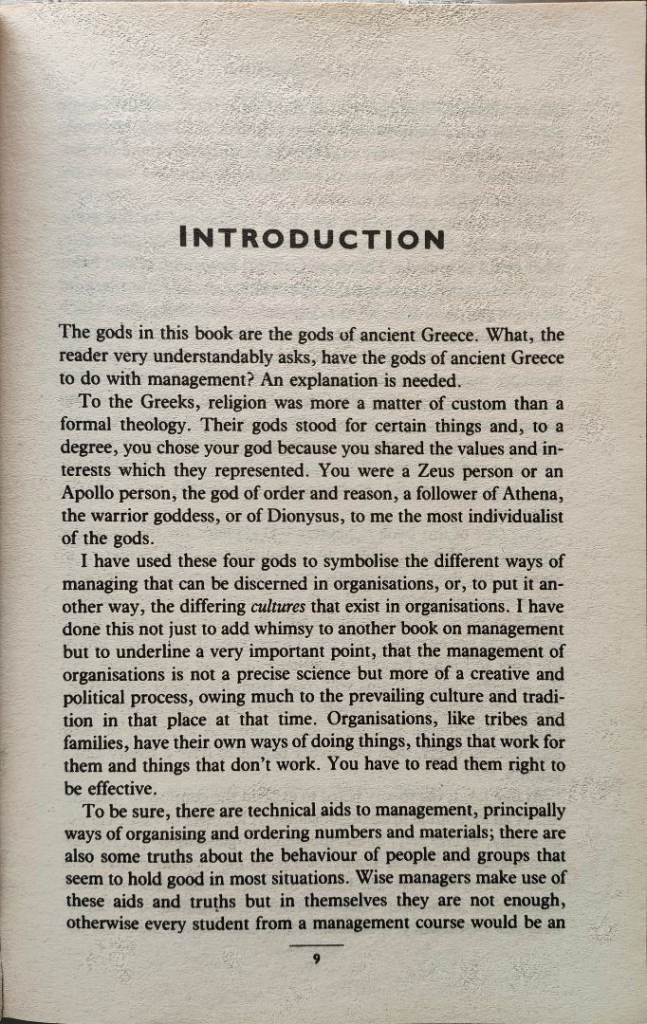
Gods of Management, by Charles Handy, introduces a framework for understanding organizational culture and management styles by drawing parallels to four Greek gods: Zeus, Apollo, Athena, and Dionysus. Each god represents a distinct approach to management, reflecting different values, structures, and ways of operating within organizations.
Key Themes:
- Zeus: The Power Culture
Characteristics: Zeus symbolizes a centralized, entrepreneurial, and often autocratic management style.
Decision-making is quick and stems from a single leader or a small group at the top.
This culture thrives in dynamic, high-risk environments where adaptability and speed are critical.
Strengths: Effective in startups, crisis situations, or organizations requiring decisive leadership.
Weaknesses: Can lead to burnout, lack of innovation, and resistance from employees due to top-down control.
Apollo: The Role Culture
Characteristics: Apollo represents a bureaucratic, rule-based, and hierarchical structure.
Roles, procedures, and clear divisions of labor define this culture.
It prioritizes stability, predictability, and efficiency.
Strengths: Ideal for large, established organizations like government agencies or traditional corporations where consistency and compliance are essential.
Weaknesses: Can become rigid, slow to adapt, and stifle creativity.
Athena: The Task Culture
Characteristics: Athena embodies a project-focused, collaborative, and results-driven approach.
Teams are formed around specific tasks or goals, and expertise is valued over hierarchy.
This culture is fluid and adaptable.
Strengths: Highly effective in creative industries, consulting, or any environment where innovation and problem-solving are priorities.
Weaknesses: Requires strong coordination and can struggle with accountability if roles are not clearly defined.
Dionysus: The Existential Culture
Characteristics: Dionysus symbolizes a individualistic, purpose-driven, and often unconventional culture.
Professionals in this setting prioritize personal fulfillment, autonomy, and alignment with a larger mission.
Common in academia, arts, or mission-driven organizations.
Strengths: Attracts highly motivated individuals and fosters deep engagement with work.
Weaknesses: Can lack structure, leading to challenges in coordination and scalability.
Why the Book Remains Important Today:
- Rejection of One-Size-Fits-All Management
Handy’s central argument is that there is no single “best” way to manage.
The book dismantles the myth that a universal management style exists, emphasizing instead that the effectiveness of a culture depends on context, goals, and the people involved.
This idea is foundational in modern discussions about agile, adaptive, and human-centered management.
- Adaptability in a Changing World
The book’s framework helps leaders diagnose and adapt their organizational culture to meet contemporary challenges, such as remote work, digital transformation, and the demand for purpose-driven employment.
For example, the rise of remote teams has made Athena-like task cultures more viable, while Dionysus cultures resonate with younger generations seeking meaningful work.
- Employee Well-Being and Engagement
Handy’s critique of rigid hierarchies (e.g., Apollo) and unchecked power (e.g., Zeus) aligns with today’s focus on employee well-being, mental health, and work-life balance.
The book’s emphasis on aligning culture with human needs is increasingly relevant as organizations prioritize diversity, inclusion, and psychological safety.
- Leadership Development
The “gods” model provides a practical tool for leaders to reflect on their own management style and its impact.
It encourages self-awareness and intentionality in shaping culture, which is critical in an era where leadership is often measured by both performance and ethical standards.
- Relevance to Hybrid and Modern Organizations
Many contemporary organizations blend elements of multiple cultures.
For instance, a tech startup might operate with a Zeus-like focus on innovation (e.g., rapid decision-making) while adopting Athena-like task teams.
Handy’s framework helps leaders navigate these hybrid environments and intentionally design cultures that balance flexibility with structure.
- Critique of Outdated Paradigms
Handy’s argument that rigid bureaucracies (Apollo) and authoritarian leadership (Zeus) are often damaging to individuals and organizations foreshadowed modern critiques of toxic workplace cultures.
The book’s call for more humane and adaptive approaches resonates with today’s emphasis on sustainable leadership and corporate social responsibility.
Enduring Legacy
Gods of Management remains a classic in organizational theory because it offers a timeless, intuitive lens for understanding workplace dynamics.
Its simplicity—using mythological archetypes—makes it accessible, while its depth provides a robust framework for analyzing real-world organizational challenges.
The book’s ideas continue to influence discussions about remote work, agile methodologies, purpose-driven organizations, and the future of leadership.
Posted: 52 days ago
Ad ID: 1513553804
Details
Stay Safe
"Only access Gumtree from gumtree.com and do not follow links sent by other users"
"Share photos and ask lots of questions about the items you are buying and selling"
"If an ad or reply sounds too good to be true, it probably is"
"Use the 'Reply to ad' button for your safety and privacy"
"Don't reply to email addresses hidden in text and pictures"
"Beware of fake Gumtree, eBay or escrow sites and invoices"
1 of 6