Buying a used car checklist: your complete guide to buying from a private seller
Buying a used car from a private seller? Follow our 10-step checklist to save money and buy safely. Includes HPI history checks, 2026 tax info, and Gumtree tips.

Key Takeaways
- Budget: Factor in 2026 VED tax rates and insurance.
- Pre-Screen: Ask about V5C ownership and service history before viewing.
- History Check: Run an HPI report to reveal hidden finance or write-offs.
- Inspection: View in daylight; check bodywork, tyres, and fluids.
- V5C Verification: Match the vehicle and seller address to the logbook.
- Test Drive: Buy insurance before the test drive; it’s a legal requirement.
- Payment: Use secure methods like bank transfers
- Ownership: Complete the V5C transfer online via the DVLA with the seller.
- Tax: You must tax the car immediately using the “New Keeper” slip.
- Rights: Private sales must be “as described” under the Sale of Goods Act.
Buying a used car from a private seller on Gumtree is an excellent way to find quality vehicles at competitive prices, and knowing exactly what to look for will help you drive away with the perfect car. This 10-step checklist provides essential tips to help you buy with confidence and secure the best possible deal.
1. Set your budget
Before browsing, get your finances in order.
- Insurance: Costs vary depending on your car, age, and driving history.
- Vehicle Tax: Check current rates for the car’s emissions and age.
- Fuel: Estimate your monthly fuel costs based on mileage.
If upfront costs are a concern, consider buying on finance instead. Flexible monthly payments can make it easier to spread the cost safely. We partner with CarMoney, so you can explore finance options directly from most used car listings. Get a quote today – CarMoney will complete a Soft Search as part of the quote, which won’t impact your credit score
2. What to ask a private seller before viewing a used car
Before arranging a viewing with a private seller on Gumtree, gather as much key information as possible. Asking the right questions early on can save you time and help you avoid unnecessary trips.
Ask:
- Is the car registered in your name, and do you have the V5C/logbook?
- Does it have service history, and when was it last serviced?
- Why are you selling the car?
- Are there any warning lights, leaks, or known faults?
- How many keys/fobs are included?
3. Run a full vehicle history check
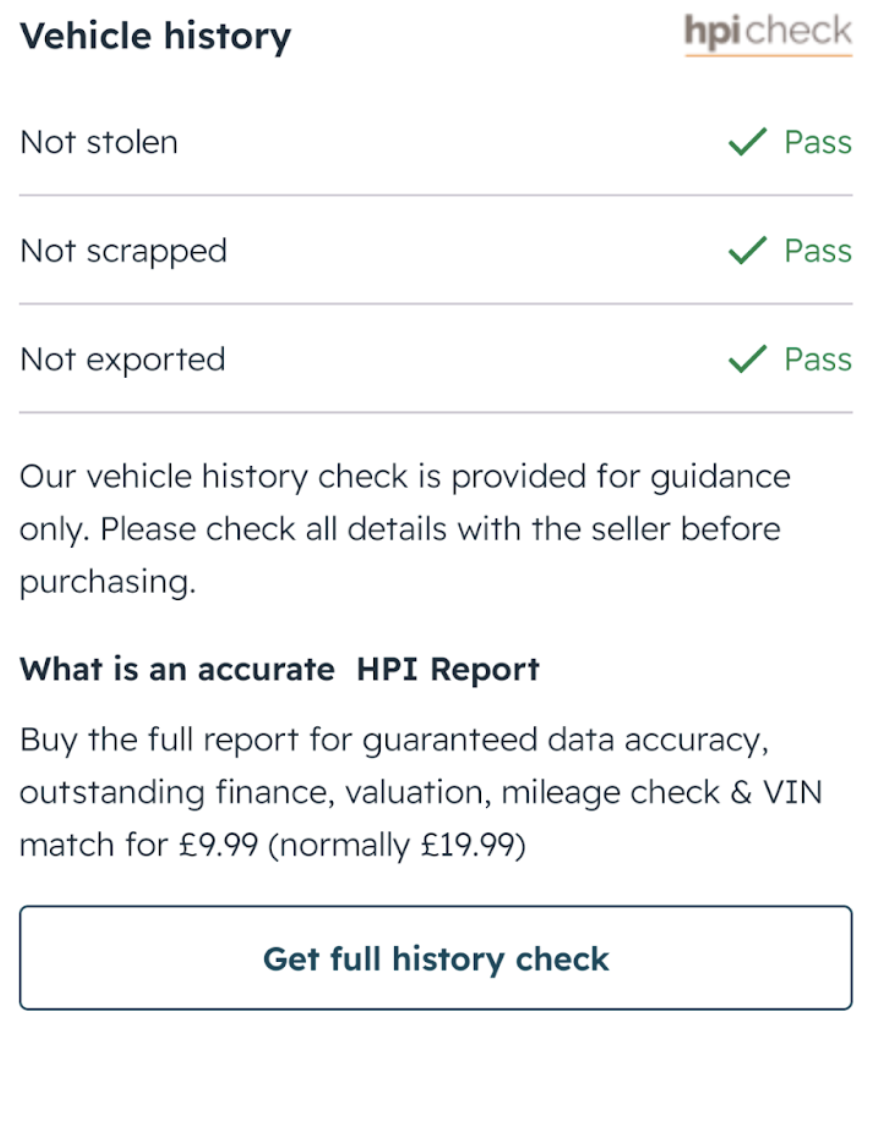
All Gumtree car listings include a basic history check from our partner HPI, showing whether the car has been reported as stolen, scrapped, or exported in official records. This information is for guidance only. For extra reassurance, buy a full HPI car history report, which can reveal more information like:
- Outstanding finance: If the car still has money owed on it, the finance company technically still owns it. That means they could repossess the car, even after you’ve paid the seller, leaving you out of pocket.
- Previous accidents or repairs: Recorded damage, insurance write-offs, or major repairs will influence the car’s value, performance, or resale potential.
When you purchase a full HPI report through Gumtree, you’ll receive 50% off the standard price. It also comes with a £10,000 data guarantee from HPI, which will provide protection if officially recorded information is missing and leads to financial loss (subject to HPI’s terms and conditions).
Get a full HPI report for only £9.99You should also check the car’s MOT due date and past MOT history on the DVLA website. Always use the official government portal.
4. Check the “Big Three” paperwork
When arranging a viewing, always prioritise safety and transparency:
- Meet at the address listed on the V5C (logbook) to confirm the seller’s details.
- View the car in daylight so you can clearly spot any damage or imperfections.
- Bring a friend or family member for added safety and a second opinion.
Take your time to thoroughly inspect both the exterior and interior of the vehicle.
| Exterior checks | Interior checks |
Dents, scratches, rust, or signs of repairHeadlights, brake lights, signalsTyre depth and conditionSuspension, oil, or coolant residue | Tears, stains, and wearRadio, heater, and power windowsMileage counterSmell of the cabin (musty smells could indicate water damage) |
5. Verify the V5C logbook and vehicle details
When buying a used car, carefully checking the V5C (often called a logbook) is essential. This helps protect you from fraud and ensures the vehicle can be legally transferred into your name.
Registered Keeper Details:
- The name and address on the V5C must match the seller.
- If the person selling the car is not the registered keeper, ask for a clear explanation and written permission from the registered keeper confirming they have authority to sell.
Vehicle Details:
Make sure the details on the V5C logbook match the car itself, including:
- Make, model, and colour
- Engine size
- VIN (Vehicle Identification Number) – usually stamped on the chassis
- Registration number
If the vehicle details or the seller’s address don’t match the V5C logbook, walk away.
6. What to check during the test drive
Before taking a car for a test drive, make sure you’re properly insured. Driving without insurance is illegal. If your existing policy doesn’t cover you to drive other vehicles, arrange temporary car insurance – it’s quick to set up and ideal for private sales.
While on the test drive, pay close attention to how the car performs. Check:
- Engine start and stop: Does it start smoothly without hesitation?
- Unusual sounds or vibrations: Listen for knocking, rattling, or excessive noise.
- Heating and air conditioning: Make sure both function properly.
- Lights and indicators: Test high beams, brake lights, and signals.
- Brakes and steering: Ensure braking feels responsive and the steering is smooth and stable.
Always bring your driving licence, as most sellers will want to see it before allowing you to drive the vehicle.
7. How to safely pay for a used car
Choosing a secure payment method is vital for a safe transaction.
- Safe Payment Methods: An immediate bank transfer is the most secure option as it provides a traceable record. If paying in cash, meet at a bank so the notes can be verified and deposited immediately.
- Avoid Unusual Requests: Be extremely cautious if a seller asks for payment via wire transfers, gift cards, or unconventional methods.
- No Payment Without Inspection: Never pay for a car or hand over a large deposit before you have seen it in person and verified the paperwork.
- Red Flags: Walk away if a deal seems too good to be true, if the seller uses high-pressure tactics, or if they are evasive about meeting at their home address.
- Receipts: Always get a signed receipt from the seller for additional protection.
8. Transfer ownership and complete the V5C correctly
When buying from a private seller, updating the V5C logbook correctly is essential. This ensures the vehicle is legally transferred into your name and helps you avoid future issues.
The V5C/2 (New Keeper Slip)
- The seller should give you the green tear-off V5C/2 slip (‘new keeper’s details’ section).
- This acts as temporary proof of ownership.
- You’ll need it to tax the car immediately.
Transfer Ownership Online
- The seller should complete the ownership transfer online via the official DVLA website.
- Provide your email address so you receive instant confirmation of the change.
- Completing the process together helps prevent errors and ensures everything is submitted correctly.
Final confirmation
- You’ll receive an email from DVLA once the transfer is complete
- The full V5C will then be posted to you in your name
For more information, see: How to transfer car ownership and update tax
9. Tax the vehicle immediately before driving away
Vehicle tax does not transfer between owners. As soon as you buy the car, it must be taxed in your name before you drive it away.
Once you have insurance in place and the V5C/2 new keeper slip, you can tax the vehicle online straight away – there’s no need to wait for the full V5C to arrive in the post.
10. Know your legal rights: Private vs. Dealer
Understanding your rights is key when buying a used car, as protections differ depending on whether you buy from a private seller or a dealer.
| Feature | Private Seller | Registered Dealer |
| Primary Law | Sale of Goods Act 1979 | Consumer Rights Act 2015 |
| Main Protection | The car must be “as described”. | The car must be of “satisfactory quality”. |
| Faulty Goods | No legal right to a refund if a fault develops after the sale. | Legal right to a refund or repair within the first 30 days. |
| Expectation | “Buyer Beware” – it’s your job to find faults. | The dealer is responsible for ensuring the car is fit for purpose. |
| Paperwork | You must create your own receipt/contract. | You receive a formal invoice and consumer contract. |
Final Thoughts
Buying a used car from a private seller on Gumtree is a smart way to find quality vehicles at competitive prices – but preparation is key. Use these tips to inspect the car, check the paperwork, and protect yourself legally and financially.
Most importantly, you should trust your instincts: if something feels off, walk away. With careful planning though, you can find a great car and drive away with confidence.
Start browsing Gumtree today to explore thousands of private seller listings across the UK.
Latest advice articles

Driving to Europe: The Ultimate Vehicle Preparation & Legal Checklist

Travelling Abroad With a Dog: Rules & Overseas Driving Guide

Travelling With a Dog in a Car: Rules & Safety Guide
Latest best of articles

Top Ten Most Searched Cars Under £1,500 on Gumtree

Best Sports Cars Under £5,000

